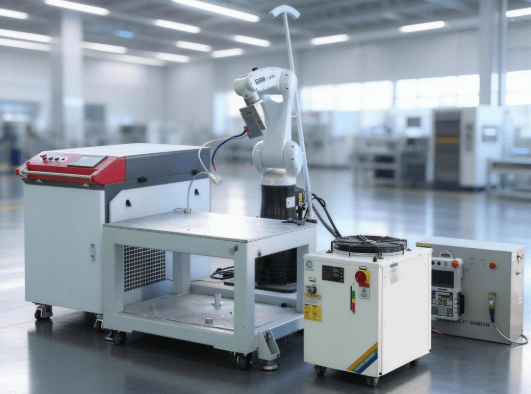

Precision manufacturing has become one of the most important aspects of modern industrial development. As industries continue producing more complex components with tighter quality requirements, traditional manufacturing methods are being supported and improved by advanced technologies that offer greater accuracy, efficiency, and reliability. Among these innovations, the fiber laser welder has emerged as a significant technology that is changing how manufacturers approach metal joining and fabrication processes across various industries.
Modern businesses are under constant pressure to improve production quality while reducing operational costs and meeting faster delivery expectations. Industries such as automotive, aerospace, electronics, medical equipment, and industrial machinery require joining solutions that can provide strong connections, minimal material damage, and consistent results throughout large-scale production.
The growth of laser-based manufacturing reflects a broader shift toward smarter and more precise production environments. Instead of relying only on traditional methods, manufacturers are adopting technologies that support automation, improve workflow efficiency, and create opportunities for advanced product development.
The Growing Importance of Precision Manufacturing
Precision has always been important in industrial production, but modern markets have increased the demand for highly accurate manufacturing processes.
Products today often contain smaller components, complex designs, and advanced materials that require careful handling during fabrication. Even minor inconsistencies can affect product performance, durability, and overall quality.
Manufacturers therefore need production technologies capable of maintaining accuracy while supporting efficient operations.
Precision manufacturing is not only about creating better products. It also helps businesses reduce waste, improve reliability, and maintain stronger competitiveness in global markets.
How Laser Technology Is Changing Metal Joining
Metal joining plays a critical role in many manufacturing industries.
Traditional welding techniques have supported industrial development for decades, but modern production requirements have introduced new challenges. Manufacturers increasingly need solutions that provide better control, improved appearance, reduced heat impact, and greater consistency.
Laser-based joining technologies address many of these challenges by offering a more controlled approach to metal fabrication.
The ability to create precise welds with minimal impact on surrounding materials has made laser technology increasingly valuable for advanced manufacturing applications.
Supporting Automotive Manufacturing Innovation
The automotive industry has experienced significant transformation through lightweight materials, electric vehicle development, and advanced component designs.
Manufacturers need joining technologies that can support new production requirements while maintaining structural reliability.
Advanced laser welding solutions help automotive companies improve manufacturing accuracy when working with complex components and modern materials.
As vehicle designs continue evolving, precision joining technologies will remain important for improving production efficiency and product performance.
See also: Finding the Right Professionals for Your Home or Business
Advancing Aerospace Production Standards
Aerospace manufacturing requires some of the highest levels of precision in the industrial sector.
Aircraft components must meet strict quality standards because performance, safety, and durability depend on manufacturing accuracy.
Production methods used in aerospace applications must provide reliable results while handling specialized materials and complex designs.
Advanced welding technologies contribute to these objectives by supporting controlled manufacturing processes that meet demanding industry expectations.
Improving Electronics and Small Component Manufacturing
The electronics industry continues moving toward smaller and more advanced products.
Manufacturers producing electronic devices, sensors, and specialized components require joining methods that can work with delicate parts without causing unnecessary damage.
Precision-based welding technologies provide greater control, making them suitable for applications where accuracy and consistency are essential.
As electronic products become more compact, the importance of advanced manufacturing techniques continues increasing.
Benefits of Greater Production Accuracy
Accurate manufacturing provides advantages that extend beyond product quality.
Improved precision can help reduce material waste, minimize production errors, and improve overall workflow efficiency.
Manufacturers benefit from more predictable production outcomes, while customers receive products with stronger reliability and performance.
Accuracy has therefore become a key factor influencing technology decisions across many industries.
Automation and Smart Manufacturing Integration
Modern factories are becoming increasingly automated.
Manufacturers are integrating robotics, digital monitoring systems, and intelligent production software to improve efficiency and operational control.
Laser-based welding technologies can support these smart manufacturing environments by working alongside automated systems and providing consistent production results.
This integration allows businesses to improve productivity while maintaining strict quality standards.
Supporting Sustainable Manufacturing Goals
Sustainability has become an important objective for industrial companies worldwide.
Manufacturers are looking for technologies that help reduce waste, improve energy efficiency, and optimize resource usage.
More precise joining methods can contribute to sustainability by reducing material losses and improving production efficiency.
Responsible manufacturing is becoming closely connected with technological advancement.
The Future of Precision Manufacturing
Industrial manufacturing will continue evolving as businesses adopt smarter technologies and respond to changing market requirements.
Future production environments will likely focus on automation, digital connectivity, advanced materials, and highly controlled manufacturing processes.
Technologies that improve precision and flexibility will remain central to this transformation.
Manufacturers that invest in advanced production methods today will be better prepared for future industrial challenges.
Final Thoughts
Precision manufacturing is entering a new era where accuracy, efficiency, and innovation define industrial success. Businesses across multiple sectors are searching for technologies that help them produce higher-quality products while maintaining competitive production costs. Advanced joining solutions are becoming increasingly important because they support better control, improved reliability, and greater manufacturing flexibility.
As industries continue embracing smarter production strategies, the fiber laser welder will remain an important technology in the evolution of modern manufacturing. By supporting precise fabrication, efficient workflows, and advanced industrial applications, it is helping businesses achieve higher production standards while preparing for the future of precision engineering.